
Making Work Visible: A Key to Successful Agile Project Management
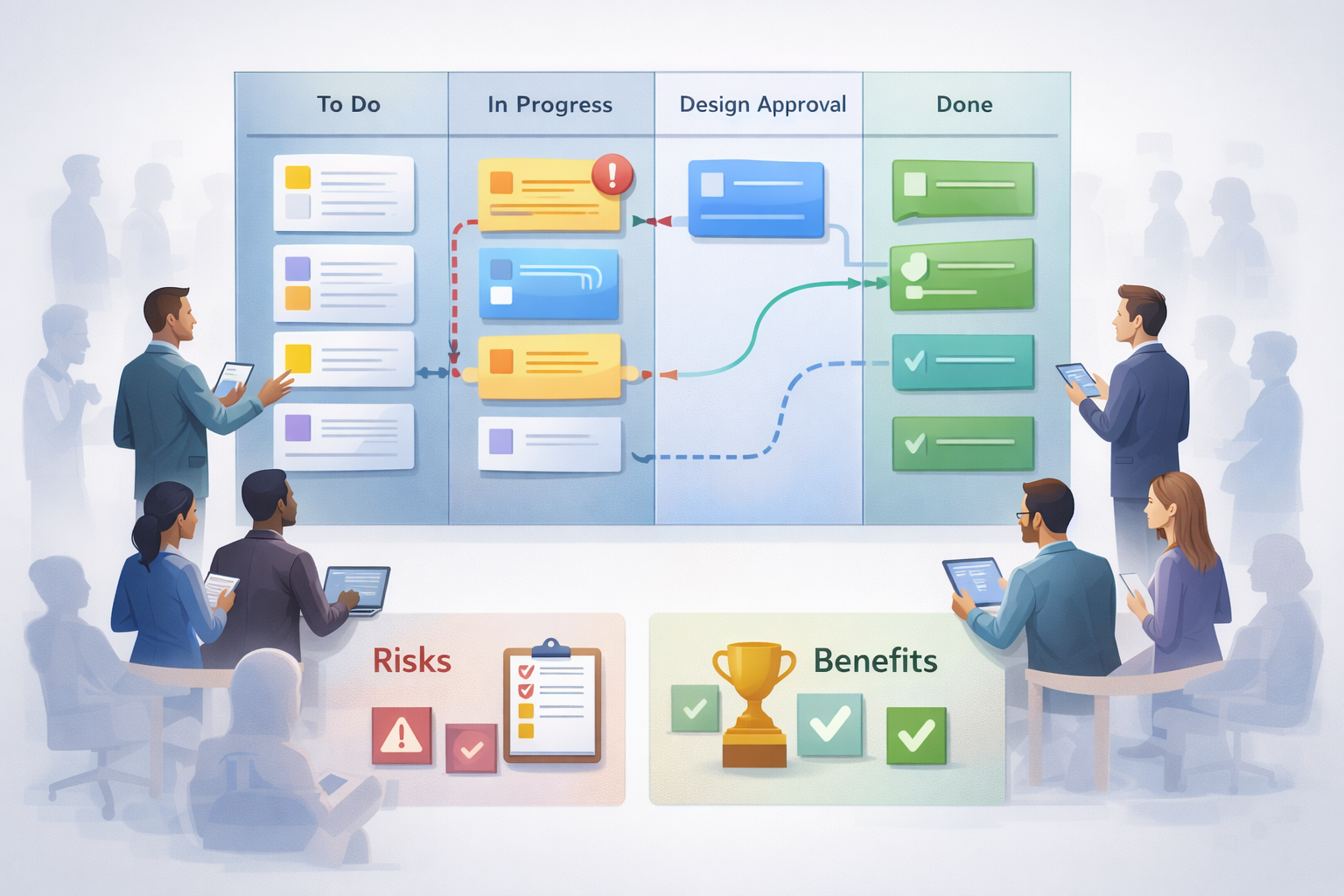
In modern application development, making work visible isn’t just a “nice to have” — it’s a strategic necessity. One of the core principles of Agile frameworks such as Scrum and Kanban is to create transparency around work so teams can communicate more effectively, identify issues early, and collaborate with clarity.
Why Making Work Visible Matters
1. Improved Communication and Alignment
When everyone knows who is doing what, collaboration becomes much smoother. Clear task visibility helps teams:
- Coordinate efforts and reduce misunderstandings.
- Spot dependencies between tasks.
- Adjust priorities quickly when needed.
🔸 Example: on a well-maintained Kanban board, it’s easy to see that a development task is waiting for design approval before it can move forward.
2. Early Detection of Bottlenecks
Visibility makes it possible to spot problems before they escalate:
- Tasks stuck in “In Progress” for too long stand out.
- Uneven workloads become obvious.
- Teams can act early rather than reacting late.
3. Increased Ownership and Engagement
When work is transparent:
- Everyone sees how their contribution fits into the bigger picture.
- Lack of engagement or inactivity becomes noticeable.
- Success is visible and easier to celebrate collectively.
4. Avoiding Misunderstandings and “Phantom Work”
Without visibility, tasks can easily slip through the cracks:
- Work gets duplicated.
- Non-priority tasks consume time.
- Problems stay hidden until they cause damage.
The Risks of Invisible Work
Failing to make work visible can lead to:
- Unforeseen delays.
- Unbalanced workloads and team frustration.
- Ineffective meetings spent “figuring out what’s going on.”
- A loss of trust in the process and the team.
In short, a lack of visibility slows down decision-making, weakens collaboration, and complicates project management.
How to Make Work Visible Effectively
1. Use a Shared and Accessible Tool
Platforms like Jira, Trello, or Azure DevOps help teams:
- Create and track tasks easily.
- Visualize progress across stages (To Do → In Progress → Done).
- Assign clear ownership.
📝 Tip: A simple, well-maintained board is more effective than a complex system nobody updates.
2. Define Clear and Common Statuses
The entire team should share the same language:
- “In Progress” means the same thing to everyone.
- Each stage is well-defined.
- The “Definition of Done” is explicit and agreed upon.
3. Leverage Agile Rituals
Regular ceremonies such as Daily Stand-ups, Sprint Reviews, and Retrospectives are designed to:
- Surface blockers.
- Synchronize team efforts.
- Adjust priorities in real time.
4. Limit Work in Progress (WIP)
A fundamental Kanban principle is to set WIP limits:
- Avoid spreading the team too thin.
- Keep the board readable and actionable.
- Deliver faster by focusing on fewer items at a time.
5. Visualize Dependencies
Show how tasks are linked using labels or connectors:
- Make dependencies explicit.
- Understand who is waiting on whom.
- Reduce idle time and context switching.
Best Practices to Sustain a Visibility Culture
- 🔹 Update the board daily.
- 🔹 Foster transparency, not blame.
- 🔹 Encourage open communication and psychological safety.
- 🔹 Provide proper training on tools and processes.
- 🔹 Adapt task granularity to the size and complexity of the project.
Conclusion
Work visibility isn’t just a project management tool — it’s a catalyst for trust, collaboration, and performance. By making responsibilities and progress visible to everyone, teams can:
- Move faster.
- Anticipate problems.
- Celebrate wins together.
In Agile, what is visible can be discussed, improved, and optimized.
What remains invisible too often becomes an obstacle.